

4
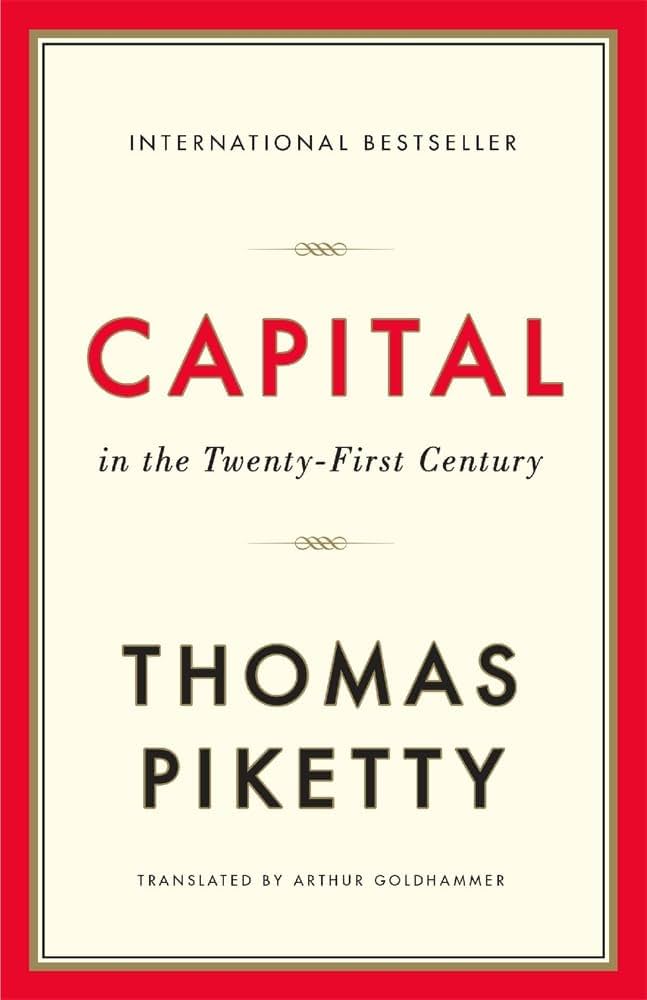
Author: Thomas Piketty
Published: 2013
Genre: Political Economy, Economic Inequality
🌍 Introduction: Why This Book Matters Today
In an era where billionaires multiply while middle-class incomes stagnate, Capital in the Twenty-First Century feels less like a book and more like a warning.
Thomas Piketty’s groundbreaking work reshaped global debates on inequality, taxation, and capitalism. Unlike many economists who rely purely on theory, Piketty brings 300 years of historical data to answer one uncomfortable question:
Is capitalism naturally unequal?
📖 What Is the Book About?
At the heart of the book lies a simple but powerful formula:
r > g
Where:
- r = rate of return on capital
- g = economic growth rate
Piketty argues that when the return on wealth grows faster than the overall economy, wealth accumulates in the hands of those who already own capital. Over time, this leads to increasing inequality.
He analyzes:
- Wealth distribution in Europe and the US
- Post–World War II equality period
- Rise of billionaire wealth in the 21st century
- Inheritance-driven capitalism
The book challenges the belief that markets naturally create fairness.
📊 Data-Driven Economics
One of the strongest aspects of this book is its empirical depth.
Piketty and his team compiled:
- Tax records from 18th-century France
- US income data
- European inheritance data
- Long-term capital returns
Unlike ideological arguments, this book relies heavily on historical evidence.
For readers who appreciate analytical depth (especially those from political science or economics backgrounds), this makes the book intellectually satisfying.
💡 Key Themes Explored
1️⃣ Capital vs Labor
The book shows how wealth from capital (assets, property, investments) grows faster than wages from labor.
2️⃣ The Return of “Patrimonial Capitalism”
Piketty suggests we may be returning to a society where inheritance determines economic destiny.
3️⃣ The Role of Taxation
He proposes progressive global wealth taxes to control extreme inequality.
4️⃣ Democracy vs Concentrated Wealth
The book questions whether democracy can survive when wealth is highly concentrated.
🧠 Strengths of the Book
✔ Massive historical data
✔ Clear central thesis
✔ Blends economics with politics
✔ Sparks global policy debate
✔ Relevant for developing economies like India
For blog readers interested in current economic trends, this book provides intellectual ammunition.
⚠️ Limitations
❌ Dense and data-heavy
❌ Over 600 pages
❌ Can feel repetitive in statistical sections
This is not a casual weekend read. It demands patience.
Although the book focuses heavily on Europe and the US, its themes are extremely relevant for India:
- Growing billionaire class
- Rising wealth inequality
- Debate over taxation
- Youth unemployment
For readers trying to understand economic disparities in India, this book provides a framework to think critically.
⭐ Final Verdict
Capital in the Twenty-First Century is not just an economics book — it is a political wake-up call.
It forces readers to confront uncomfortable truths about capitalism and inequality. Whether you agree with Piketty or not, the book expands your understanding of how wealth shapes societies.
⭐ Rating: 4.5/5
Best for:
- Policy enthusiasts
- Political science students
- Economists
- Serious readers