

Introduction
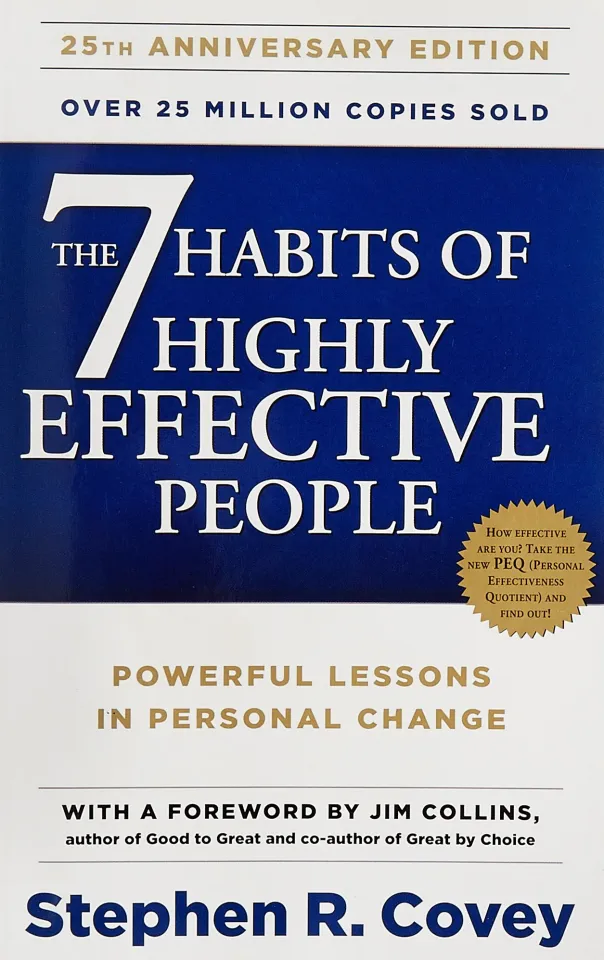
In a world flooded with productivity hacks and motivational quotes, very few books have stood the test of time. The 7 Habits of Highly Effective People is one such classic. First published in 1989, this book has sold over 25 million copies worldwide and continues to influence leaders, entrepreneurs, students, and professionals alike.
Rather than offering quick fixes, Stephen R. Covey presents a principle-centered approach to personal and professional effectiveness. His message is simple yet profound: lasting success comes from character, not just personality.
Core Philosophy: Character Over Personality
Covey argues that many self-help strategies focus on surface-level personality traits—how to appear confident, persuasive, or charismatic. However, true effectiveness is rooted in deep values such as integrity, responsibility, fairness, and human dignity.
He introduces a powerful concept called the “Paradigm Shift.” According to Covey, real change begins when we change the way we see the world—and ourselves.
The 7 Habits Explained
The habits are divided into three stages of growth:
- Private Victory (Self-Mastery)
- Public Victory (Relationships & Leadership)
- Renewal (Continuous Improvement)
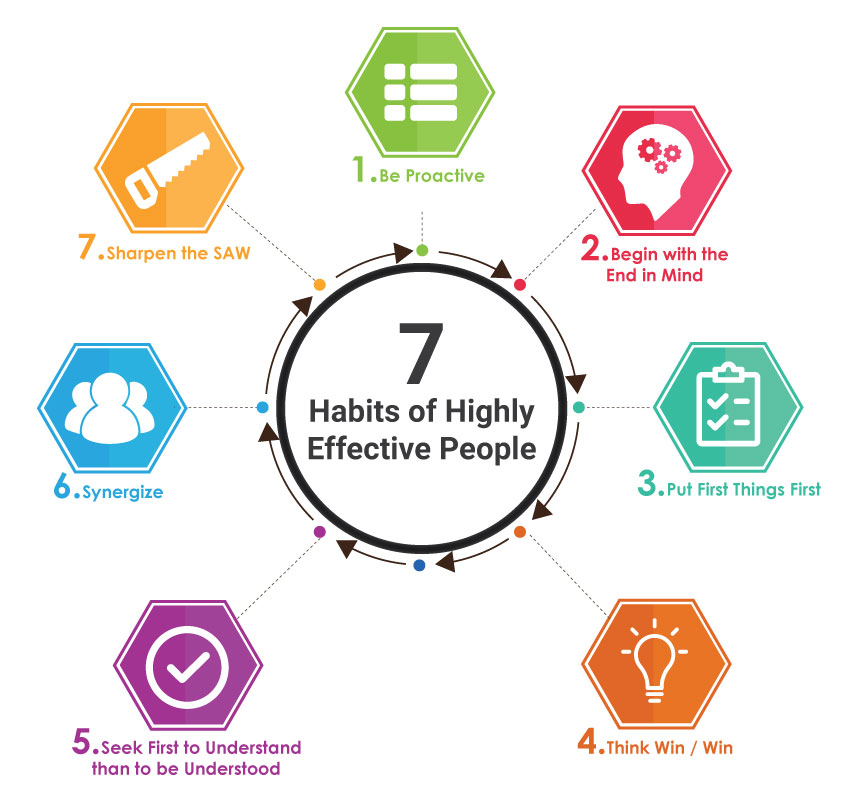
1️⃣ Be Proactive
This habit emphasizes responsibility. Instead of blaming circumstances, proactive people take control of their responses. Covey introduces the idea of the Circle of Concern vs. Circle of Influence—focus on what you can control.
2️⃣ Begin with the End in Mind
Covey encourages readers to define their personal mission and long-term vision. If you don’t know where you’re going, you’ll end up somewhere else.
3️⃣ Put First Things First
This is about time management based on priorities, not urgency. Covey’s Time Management Matrix (urgent vs. important) is one of the book’s most practical tools.
4️⃣ Think Win-Win
Success is not a zero-sum game. Effective people seek mutually beneficial solutions in relationships and business.
5️⃣ Seek First to Understand, Then to Be Understood
One of the most powerful habits. Covey highlights empathetic listening as the foundation of trust and communication.
6️⃣ Synergize
Teamwork and collaboration create better outcomes than individual effort. Differences should be valued, not feared.
7️⃣ Sharpen the Saw
Continuous self-renewal is essential. Covey divides renewal into four dimensions:
- Physical
- Mental
- Social/Emotional
- Spiritual
This habit ensures sustainable growth rather than burnout.
Why This Book Still Matters Today
Even decades after publication, the principles remain relevant because they are based on universal values rather than trends. Whether you’re:
- A student building discipline
- A freelancer managing clients (especially relevant as you’re building your writing career)
- A manager leading a team
- Or an entrepreneur scaling a business
These habits provide a strong foundation.
For freelance writers and professionals, habits like proactivity, clarity of vision, and empathetic communication are game changers.
Strengths of the Book
✔ Timeless principles
✔ Practical frameworks
✔ Strong ethical foundation
✔ Real-life examples
✔ Applicable across professions
Limitations
While powerful, the book:
- Requires deep reflection (not a quick read)
- Can feel repetitive in some chapters
- Focuses more on philosophy than tactical productivity hacks
However, these “limitations” are also what make it profound.
Personal Takeaway
The biggest lesson from The 7 Habits of Highly Effective People is that effectiveness is a habit, not an accident. Success is not built in a day—it’s built daily.
If you apply even 2–3 of these habits consistently, you’ll notice measurable growth in discipline, clarity, and relationships.
Final Verdict ⭐⭐⭐⭐⭐
This is not just a self-help book; it’s a life manual.
If you haven’t read it yet, it deserves a place on your bookshelf.
Recommended For:
Students, professionals, leaders, entrepreneurs, freelancers, and anyone serious about personal growth.